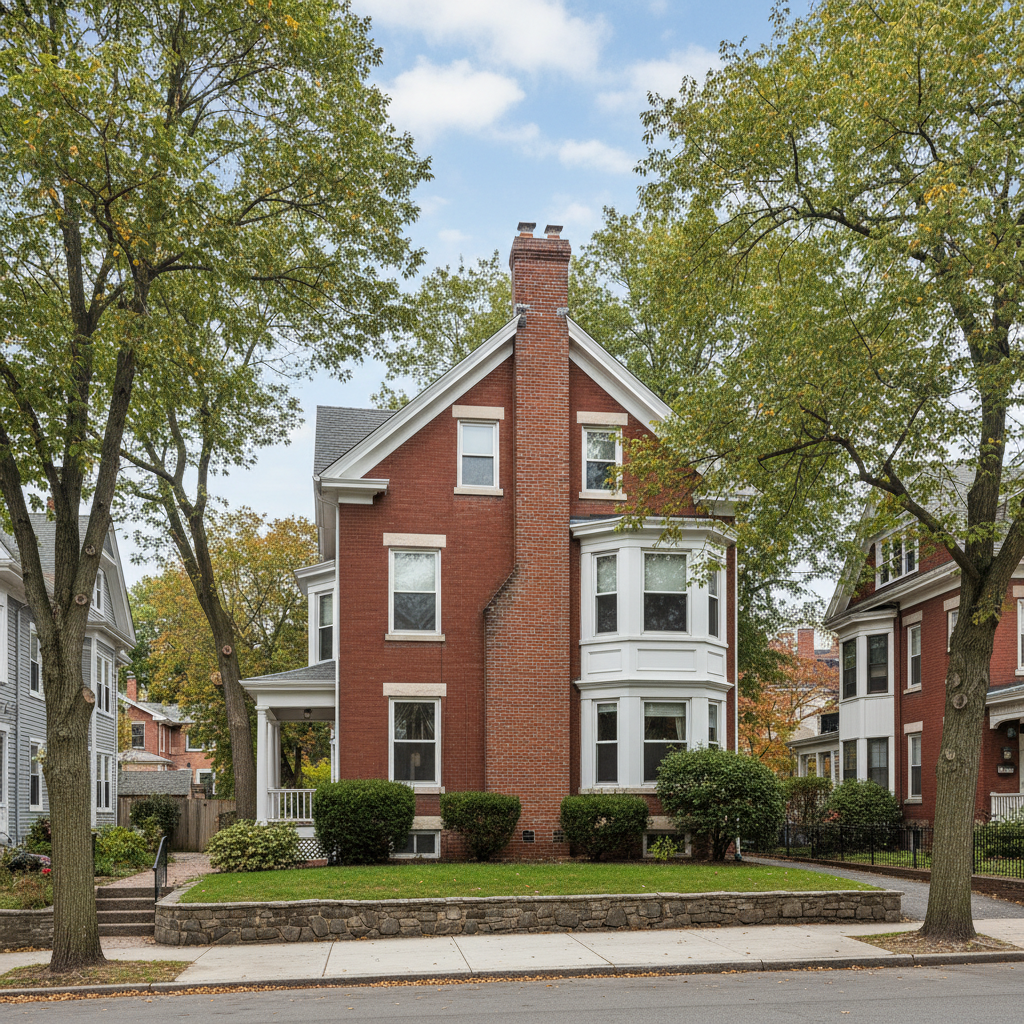
Your chimney isn't just a decoration on your Boston home; it's a critical part of your heating system and a major structural element. And let's be honest, it takes a beating out here. I've seen chimneys all over this city, from the triple-deckers in Dorchester to the historic brownstones in the South End, and one thing's for sure: they all need attention eventually.
What's Hitting Your Chimney Hard in Boston?
People often ask me why their chimney seems to deteriorate faster than other parts of their house. It's simple, really. It's exposed to everything. Up here in New England, we get the full spectrum of weather, and your chimney is right in the thick of it.
- Freeze-Thaw Cycles: This is the big one. Water gets into tiny cracks in the mortar or bricks. Then winter hits, that water freezes, expands, and pops bits of masonry off. When it thaws, the process starts again, making the cracks bigger. We see this cycle play out constantly from November to April.
- Salt Air: If you're anywhere near the coast, that salty air isn't doing your masonry any favors. It can accelerate corrosion and degradation over time.
- Heavy Rains and Snow: Our Nor'easters dump a ton of moisture. If your chimney cap is damaged or your flashing isn't sealed right, that water gets right inside, causing all sorts of problems you don't even see until it's too late.
- Age of Homes: A lot of Boston's housing stock is old. We're talking chimneys that have been standing for 80, 100, even 150 years. They were built tough, but nothing lasts forever without maintenance.
Common Chimney Issues We Fix Around Here
When I get called out to a house in Boston, there are a few things I'm almost always looking for. These are the bread-and-butter chimney repairs we do at Apex Masonry Solutions:
- Cracked or Spalling Bricks: This is when the face of the brick starts to peel or flake off. It's usually a sign of water damage and freeze-thaw cycles doing their work. If you see this, don't ignore it. It means the brick is losing its protective layer and will deteriorate faster.
- Deteriorated Mortar Joints: The mortar between your bricks is softer than the bricks themselves, so it wears out first. When it crumbles, it allows water into the structure and weakens the whole chimney. That's when we're talking about tuckpointing – carefully removing the old, bad mortar and putting in new, strong stuff.
- Damaged Chimney Crowns: The crown is that concrete slab on top of your chimney. It's supposed to shed water away from the flue and the masonry below. If it's cracked, water gets right in, and that's a fast track to bigger problems.
- Leaky Flashing: This is the metal that seals the joint where your chimney meets your roof. If it's bent, rusted, or improperly installed, you're going to get leaks into your attic or even down your walls. I've seen a lot of interior water damage that homeowners thought was a roof problem, but it turned out to be the flashing.
- Missing or Damaged Chimney Caps: A cap keeps rain, snow, leaves, and critters out of your flue. Without one, you're inviting trouble. Critters can build nests, blocking the flue and creating fire hazards.
Why Does Local Expertise Really Matter for Your Chimney?
You might think a chimney is a chimney, no matter where you are. But in a city like Boston, that's just not true. Hiring a local pro isn't just about convenience; it's about getting someone who understands the specific challenges and building styles of our area.
First off, we know the codes. Boston has its own set of building codes and historical district regulations. You don't want to hire someone who's going to do work that doesn't pass inspection or, worse, damages your historic property. We're familiar with the types of materials originally used in older Boston homes and how best to repair or match them.
Second, we understand the local climate's impact. I've already mentioned the freeze-thaw cycles and salt air. A contractor from a different region might not fully appreciate just how aggressive these conditions are on masonry. We know what materials hold up best here, what kind of mortar is appropriate for our climate, and how to build or repair a chimney to withstand our specific weather patterns for the long haul.
Third, we're right here. If you have an emergency – say, a storm damages your chimney – you want someone who can get to you quickly. We're not driving in from two states over. Plus, you can check our references right here in town. Ask your neighbors, they probably know us or someone we've worked for.
Don't just pick the cheapest guy you find online. For something as important as your chimney, you want someone who knows Boston, knows its homes, and knows how to build things to last in this tough environment. If you're seeing signs of wear on your chimney, give us a call. We'll come out, take a look, and give you an honest assessment. That's what we do at Apex Masonry Solutions.