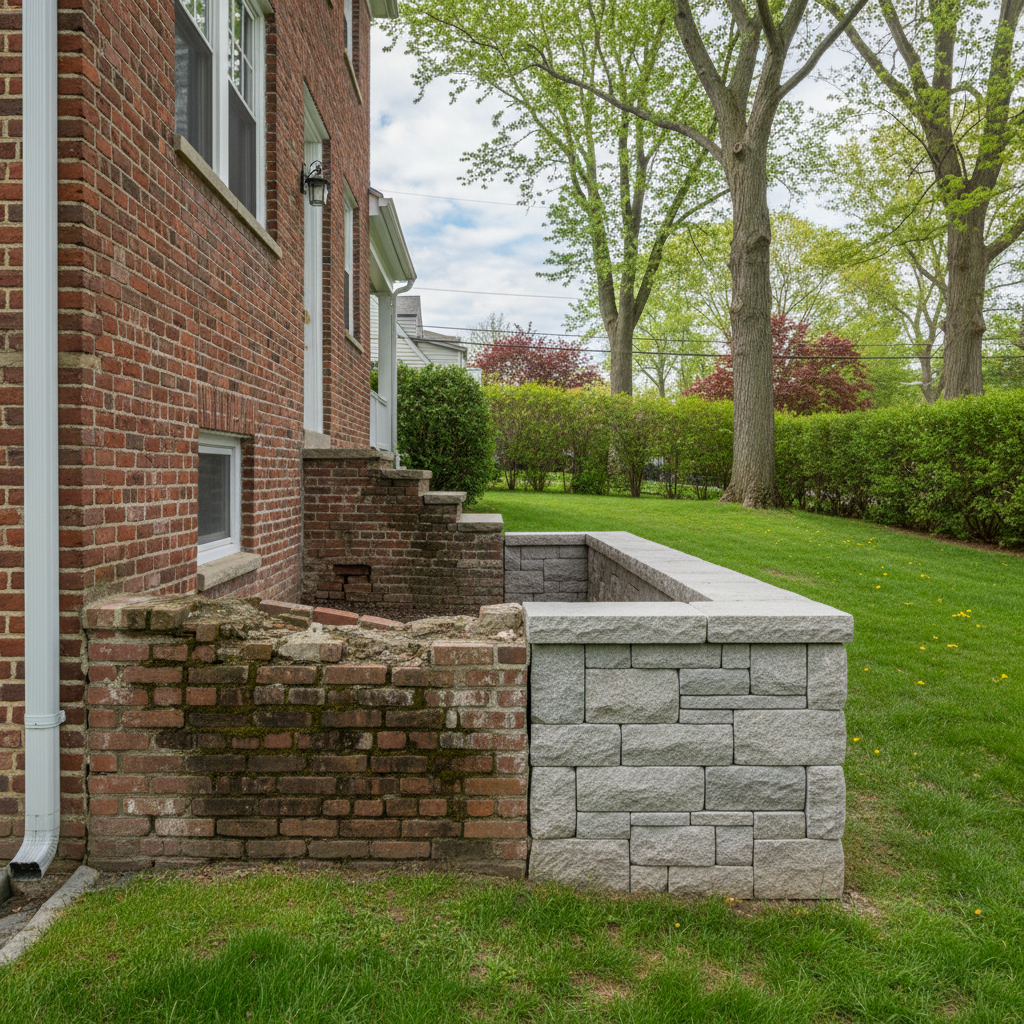
Anyone who has tried to pry a frozen rock out of the ground in Dorchester after a hard January freeze already knows what New England weather does to masonry. When homeowners call Apex Masonry Solutions to talk about building a new stone retaining wall or patio feature in Boston, MA, they are usually torn between two distinct styles: traditional dry stack stone and mortared stonework. Both options look great, but they behave completely differently once the Boston weather starts testing them.
Dry stack stone is an ancient technique where stones are shaped and fitted together without a drop of mortar holding them in place. Gravity, friction, and craftsmanship keep the whole structure standing. Because there is no rigid mortar joint to crack, dry stack walls handle ground movement very well. When the soil in a South Boston yard freezes, expands, and thaws out in the spring, a dry stack wall can shift slightly and breathe without falling apart. The downside is that upfront labor costs for dry stack stone are high. It takes serious time to hand-select and balance every single piece so the dry stack stone structure remains solid for 15 to 20 years or more.
Mortared stone is the other route, and you see it all over the historic triple-deckers and brownstones around Boston, MA. This method uses cement mortar to lock the stones together into a rigid, unified panel or mass. Upfront, mortared stone can sometimes be faster to install than a complex dry stack puzzle, and it provides a very tight, clean seal that keeps out wind-driven rain. But mortar has a major issue in Massachusetts: water gets inside hairline cracks, freezes when temperatures plummet, and pops that mortar right out. Give it 5 to 10 years of harsh New England winters, and homeowners are likely looking at repointing work to keep things structurally sound.
When it comes to maintenance, dry stack stone wins easily. If a stone gets knocked loose or shifts out of place, you can usually tap it back or reset it without calling in outside help. Mortar repairs require cutting out old material, mixing up a matching batch, and tuckpointing the joints so they do not stick out. Appearance-wise, the choice comes down to personal taste. Dry stack stone offers a rugged, rustic look that fits right into natural landscapes. Mortared stone work can range from neat, tight joint lines to heavy, rustic overgrout styles depending on what you want.
Apex Masonry Solutions builds a lot of both. For typical Boston soil and weather conditions, a well-built dry stack stone wall is recommended for freestanding or retaining garden walls where drainage and ground shift are major factors. If you are putting together an outdoor kitchen structure, a permanent structural pillar, or facing the foundation of your home in Boston, MA, mortared stone gives you the rigidity and weather seal you need. Pick the right tool for the job, invest in good drainage behind the wall, and your stonework will outlast us all.