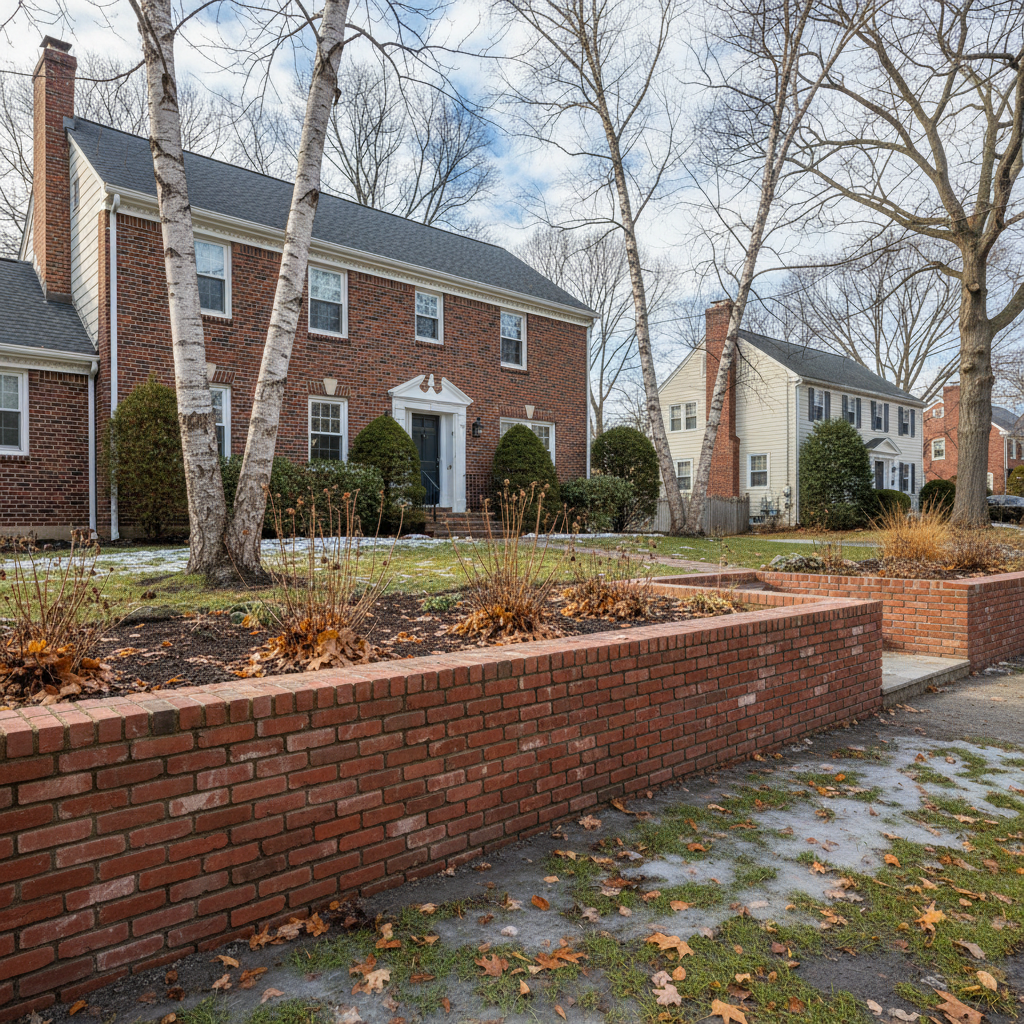
The Reality of New England Weather on Brick
If you own a triple-decker in Dorchester or a historic brownstone in the South End, you already know our climate does not do favors for brickwork. New England weather throws everything it has at our buildings. We deal with coastal nor'easters, freezing winter nights, and damp springs that soak right into porous masonry. When water gets trapped inside brick and mortar joints and temperatures drop, that moisture turns to ice. Ice expands, and suddenly you are looking at spalling faces and cracked mortar lines.
Apex Masonry Solutions spends a lot of time helping homeowners figure out the right methods to tackle exterior repairs. You cannot just slap mortar onto a freezing wall and hope for the best. Chemistry does not work that way.
When Can You Actually Lay Brick in Boston?
Temperature dictates everything in this trade. Mortar needs a stable environment to cure correctly. Once the thermometer drops below 40 degrees Fahrenheit, cement hydration slows down dramatically. If fresh mortar freezes before it sets, the bond fails completely, leaving you with crumbling joints by the time summer rolls back around.
- Spring brings variable weather, meaning we have to watch out for sudden late frosts and heavy dampness.
- Summer offers the most stable conditions, though high humidity and blazing sun can dry out mortar too fast if we are not careful.
- Fall is prime time for masonry work, provided we get it done before the overnight lows consistently bottom out.
- Winter requires specialized containment, heated enclosures, and masonry blankets, which adds complexity and cost to the job.
Protecting Your Investment Year-Round
Waiting until a brick wall is actively failing will cost you significantly more than routine maintenance. Regular inspections catch small cracks in the mortar before water finds a pathway inside. Keep your gutters clean, too. Overflowing water running down the face of a brick wall creates localized saturation points that accelerate decay faster than normal weathering ever will.
If you are planning a project, look ahead. Reach out to contractors early in the season before schedules fill up, and give your home the defense it needs against the next New England freeze.